
On-Site Truck and Equipment Repair Keeps Your Fleet Moving
Last Updated: November 18, 2026
Quick Summary
On site truck and equipment repair sends a certified technician with a fully equipped mobile unit to your truck or heavy equipment instead of you paying to tow it to a shop. At Big Rig Truck Repair, we offer 24/7 mobile road service built around that idea, so the truck may be diagnosed and fixed on the spot.
Towing a loaded semi or heavy equipment is slow, expensive, and sometimes risky.
Emergency calls follow five steps: intake, triage, dispatch, on-scene diagnosis, and repair or recovery.
Brake, steering, and wheel-end faults usually trigger a safety stop rather than a roadside fix.
A clear estimate itemizes diagnosis fee, labor hours, parts, and any after-hours or travel charges.
Preventive maintenance moves work from emergency dispatch to scheduled service, so you control timing and cost.
Truck down right now? Here is your next step.
Big Rig Truck Repair sends certified mobile technicians to diagnose and fix heavy-duty trucks and equipment on site.
Table of Contents
Why On-Site Truck and Equipment Repair Beats Towing
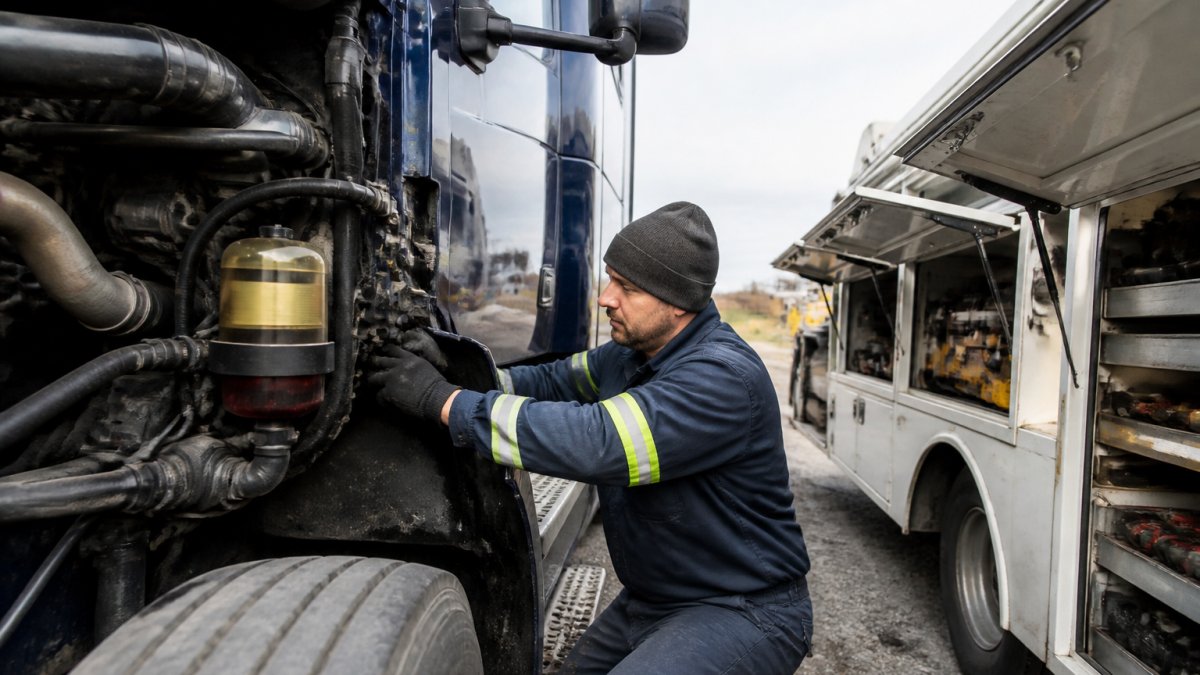
When a truck goes down, the first call often decides the cost of the whole day. On site truck and equipment repair is a service model where a certified technician brings a fully equipped mobile unit to your truck or heavy equipment, rather than you paying to move the vehicle to a shop. At Big Rig Truck Repair, we offer 24/7 mobile road service built around that idea.
Towing a loaded semi or a piece of heavy equipment is slow, expensive, and sometimes risky. Mobile repair can avoid that chain of events by bringing the technician to the breakdown, where the truck may be diagnosed and fixed on the spot.
The math is simple. Every hour a commercial vehicle sits idle, it stops earning and starts costing. A repair that happens on the shoulder or in your own yard gets the truck back on the road faster than a tow-and-wait cycle.
Commercial Truck Repair Services That Come to You
The best way to judge commercial truck repair services is to ask what the mobile unit can actually do on the road. Not every job can be finished at the roadside, and an honest provider will tell you which is which before dispatching.
A well-equipped mobile truck repair service typically handles:
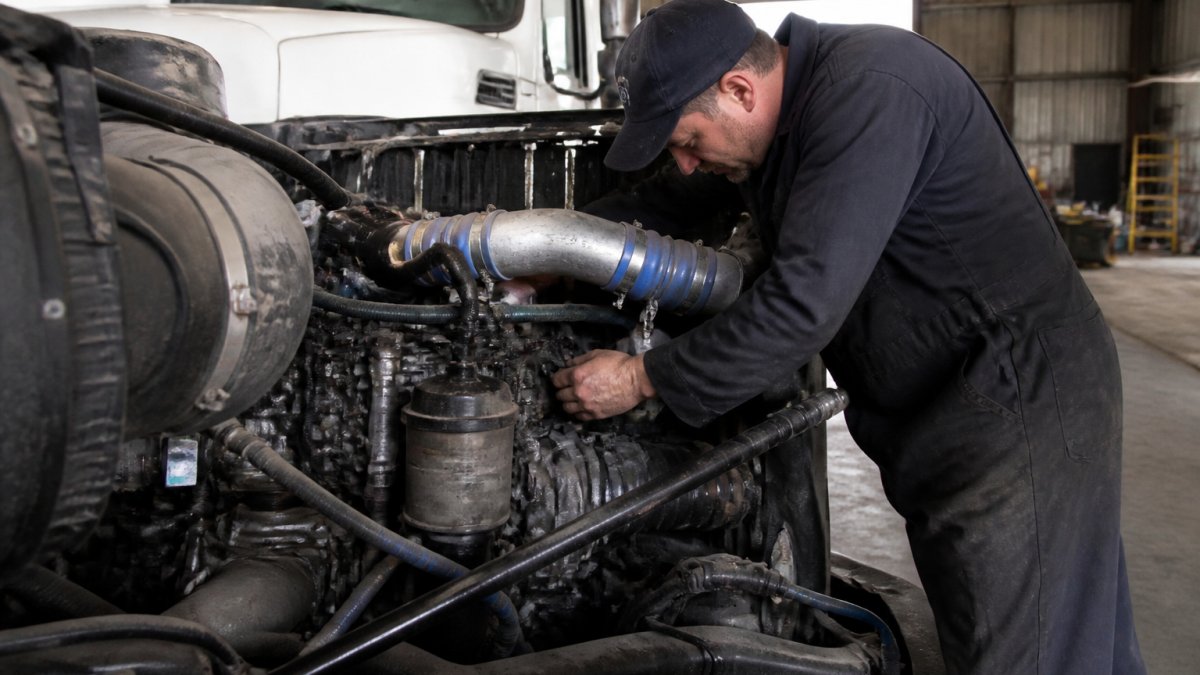
Engine diagnostics and repair, including fault-code reading and no-start troubleshooting
Brake systems, including air brake adjustments and leak checks
Electrical issues, from batteries and alternators to wiring faults
Tires and wheel-end problems on trucks and trailers
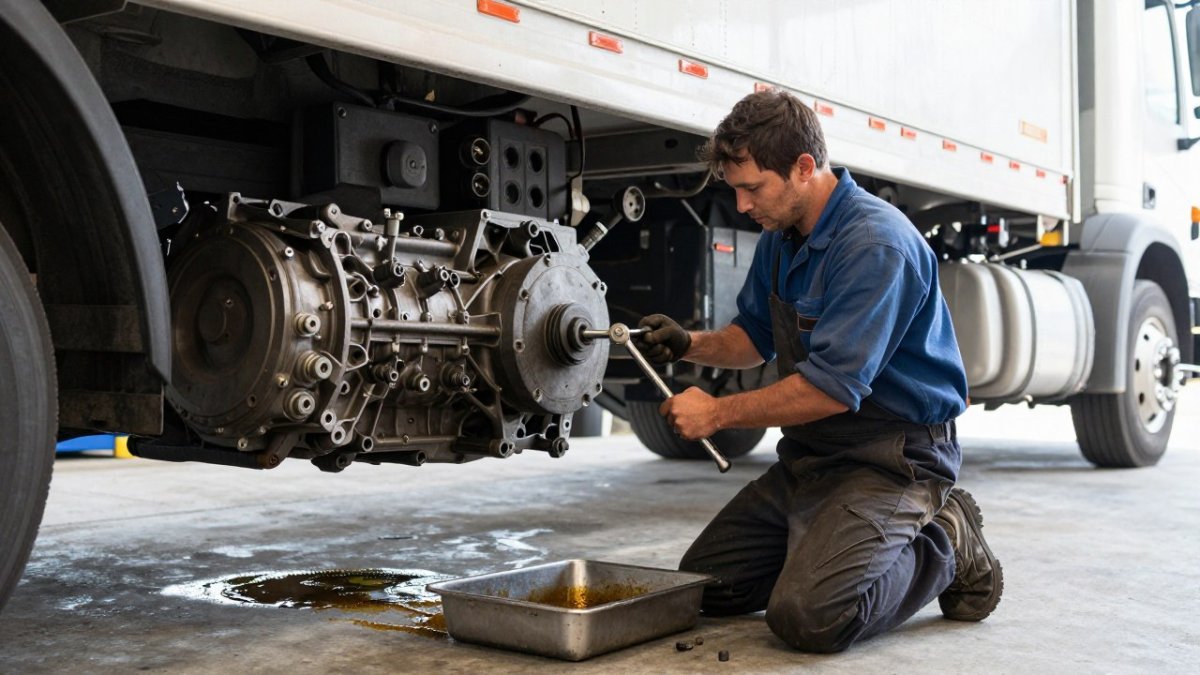
Drivetrain inspection and maintenance, including clutch and differential checks
Diesel vehicle service, such as fuel system and DEF-related faults
DOT inspections and vehicle inspection support for fleets that need to stay compliant
Before you commit, ask how the provider vets its technicians and what equipment the service truck carries. A mobile mechanic without the right tools will still end up towing you. If you want a practical checklist for choosing a provider, our guide on how to find a big rig shop near me that fixes it right walks through the questions worth asking.
Emergency Roadside Truck Repair: What Happens After You Call
Emergency roadside truck repair follows a predictable sequence. Here is what to expect from the first call to the repair or recovery decision.

Intake. The dispatcher records your location, the vehicle type and class, the load status, and the symptoms. Be specific: a no-start is different from a crank-no-fire, and a brake warning light is different from a low-air alarm. Have your unit number, plate, and mile marker or GPS coordinates ready.
Triage. The team decides whether the issue is safe to handle roadside or needs a shop. Brake, steering, and wheel-end faults usually trigger a safety stop; a dead battery or a tire change is typically a roadside job. Ask which category your call falls into and why.
Dispatch. A technician with the right parts and tools is sent, and you get an estimated arrival window. Confirm whether the window is a firm estimate or a range, and get a callback number for the technician or dispatcher.
On-scene diagnosis. The technician confirms the fault before quoting work. Ask for the diagnosis in plain language and for the estimate in writing before authorizing repairs.
Repair or recovery. Either the truck is fixed on the spot or a recovery plan is agreed with you first. You should never be surprised by a tow, confirm up front whether the goal is roadside repair or recovery, and get the decision in writing.
What to have ready before the technician arrives:
The vehicle's make, model, year, and unit number
A clear description of the symptom and when it started
Any fault codes or dashboard warnings you can see
Your location, including mile marker, exit, or GPS pin
Whether the load is hazardous, oversized, or temperature-sensitive
A contact name and number on site
A provider that answers 24/7 and gives you a realistic response time is worth more than one that promises instant arrival.
Here is the sequence a call follows, from intake to the repair or recovery decision.
Step | What happens | What to do |
Intake | Dispatcher records location, vehicle type and class, load status, symptoms | Have unit number, plate, mile marker or GPS ready |
Triage | Team decides if issue is safe roadside or needs a shop | Ask which category your call falls into and why |
Dispatch | Technician with right parts and tools is sent | Confirm arrival window and get a callback number |
On-scene diagnosis | Technician confirms the fault before quoting work | Ask for diagnosis in plain language and written estimate |
Repair or recovery | Truck fixed on the spot or recovery plan agreed | Confirm up front whether goal is repair or recovery |
Mobile Heavy Equipment Mechanic Hourly Rate and What Drives It
Pricing for mobile repair depends on the job, so the full estimate is what matters. Understanding how the line items stack up lets you read an estimate fairly.
What drives the rate up or down:
Equipment class and size. A Class 8 tractor and a piece of construction equipment need different tools, lifting capacity, and skill, and the labor rate should reflect that.
Job complexity. Fault-code diagnostics and no-start troubleshooting take longer than a straightforward component swap, and the estimate should state the expected hours and why.
Access at the site. A truck in an open yard is faster to work on than one wedged against a loading dock or parked on a narrow shoulder with traffic passing.
Time of day and season. Peak emergency windows and severe weather increase both response time and cost.
A transparent provider will break the call fee, labor rate, after-hours premium, travel charge, and parts markup into separate lines. Ask for the estimate in writing before work begins, and confirm what happens if the diagnosis reveals a larger problem, whether you get a revised estimate and approval step or the original quote stands.
Truck Repair Costs: What a Repair Estimate Should Show You
A clear truck repair estimate should be itemized and state what is included.
Your estimate should show:
Diagnosis fee, and whether it is credited toward the repair
Labor hours at a stated rate, with the reason for the hours
Parts, listed by description and price, with new versus remanufactured noted
Any additional charges, such as after-hours or travel fees
What is not included, so scope creep does not surprise you
Watch out: the most common budget killer is an estimate that lists labor but not the diagnostic charge, then adds it at the end. Ask directly whether the diagnosis is included. For a closer look at what specific repairs tend to involve, our breakdown of what heavy duty truck brake repair costs gives you a benchmark to compare against.
Triage and Safety Before the Technician Arrives
Safety comes before speed. While you wait for the technician, a few simple steps protect you, your crew, and the truck.
Move the vehicle as far off the travel lane as possible and turn on hazard lights.
Set out reflective triangles or cones behind the vehicle, especially on a highway shoulder.
Keep the crew clear of traffic and away from the vehicle's blind spots.
Do not crawl under a truck that is not properly secured, and do not attempt repairs you are not trained for.
If the breakdown involves brakes, treat it as a safety stop. Do not drive a truck with a suspected air brake leak. Our step-by-step guide on how to check a semi truck air brake leak covers the applied and static leak tests so you can document the problem clearly for the technician. The more precise your description, the faster the diagnosis.
Fleet Preventive Maintenance Planning That Prevents Breakdowns
Preventive maintenance is the cheapest repair you will ever pay for. A planned maintenance schedule catches small faults before they strand a truck, and it keeps your commercial fleet compliant and predictable.
A workable fleet maintenance plan includes:
Scheduled inspections at set mileage or hour intervals for each vehicle type
Brake and tire checks on a fixed cycle, not just when something feels wrong
Fluid and filter service tracked per unit
DOT inspection readiness built into the calendar
A single log for every service, so history travels with the truck
The goal is to move work from emergency dispatch to scheduled service. When maintenance is planned, you control the timing and the cost. When it is not, the breakdown controls both. If downtime is already eating into your margins, our guide on how to reduce truck breakdown downtime goes deeper on the strategies that work.
Request On-Site Truck and Equipment Repair for Your Fleet
Breakdowns do not schedule themselves around your dispatch board. The fleets that stay moving are the ones that pair a solid preventive maintenance plan with a repair partner available around the clock.
Big Rig Truck Repair is a family-owned business offering 24/7 big rig repair and mobile road service for heavy-duty trucks. Our certified technicians combine advanced diagnostics with expert craftsmanship, and we keep you informed about what we find. When you are ready to stop losing hours to the shoulder, request on-site truck and equipment repair for your fleet and get a clear plan and a truck back on the road.
A breakdown on the shoulder is a decision point, and the partner you call shapes the outcome. Big Rig Truck Repair brings 24/7 mobile road service, advanced diagnostics, and transparent communication to every call, so you know what is wrong and what it takes to fix it. Get started with Big Rig Truck Repair and keep your fleet moving.
Frequently Asked Questions
How much do mobile heavy equipment mechanics charge per hour?
The mobile heavy equipment mechanic hourly rate varies by job complexity, equipment type, travel distance, and whether the call is after hours. A service call typically includes a dispatch or call-out fee plus labor, and parts are billed separately. Because rates change, ask for the call-out fee and hourly rate before you approve work. For current pricing or a quote, visit the Big Rig Truck Repair website.
When should a fleet use on-site truck repair instead of a repair shop?
On-site truck repair can make sense when the truck cannot safely move or when towing would cost more than the repair. Mobile service also fits routine diagnostics and preventive maintenance at your yard, since you avoid moving the whole fleet. Shop repair is better for major engine overhauls, frame work, or jobs that need a lift and specialized equipment. Ask the dispatcher whether your specific fault can be handled in the field before committing.
What repairs can a mobile diesel mechanic perform on-site?
A mobile technician can typically handle engine diagnostics and certain repairs in the field. Ask the provider which services it performs on-site. Jobs requiring a lift, major teardown, or machine shop work usually move to a shop. Describe the symptoms and equipment type when you call so dispatch sends the right technician and parts.
What information should I provide when requesting roadside truck repair?
Give the dispatcher your exact location, the truck type, the symptoms you observed, and whether the vehicle is loaded. Mention any warning lights, unusual noises, or fluid leaks, and confirm whether the truck is blocking a lane. Share your fleet contact and a callback number. Clear details let dispatch match the technician and parts to the job, which shortens response time and reduces the chance of a second trip.
Comments