
Truck Roadside Repair Response Time: What to Expect
Table of Contents
Last Updated: October 12, 2026
Truck Roadside Repair Response Time: The Honest Numbers
Truck roadside repair response time is the gap between your call for help and a mobile technician reaching your broken-down rig. The truth: a real estimate depends on where you are, what time it is, and how heavy traffic is.
Most providers promise "fast" service but never explain what that means when your truck dies on the shoulder of I-5 at 2 AM.
Key Takeaway Response time is not one number. It is a range that shifts with your location, the hour, and the weather. Ask for a range, not a promise.
A Transparent Response-Time Range by Location and Conditions
Most providers will not put a number on the phone, and the ones that do quote a best case. A useful estimate separates the wait into stages, each with its own clock and variables.
The Four Stages of a Response
Dispatch and triage, the time between your call and a technician being assigned. Usually the shortest stage, but it stretches during a surge (winter storm, pileup) or when the dispatcher must call several providers to find an available unit.
Travel to your location, the drive from the technician's current position to your truck. This is almost always the longest stage and the one drivers underestimate.
On-site diagnosis, the technician's inspection before any repair begins. Even a simple no-start can take 10-20 minutes if the fault is intermittent.
Repair or tow decision, the actual fix, or the call to bring a tow if the problem is beyond roadside scope.
When a dispatcher gives a single number, ask which stage it covers. "Forty-five minutes" usually means travel only, not arrival-and-fixed.
Realistic Ranges by Location Type
The ranges below are patterns, not promises, they reflect how far a technician typically drives and how much traffic sits between the shop and your truck.
Location type | Typical travel window | What drives the range |
Dense metro, business hours | Shortest window | Multiple providers within a few miles; congestion is the main variable |
Dense metro, overnight | Short window, but fewer units on shift | Fewer technicians working; dispatch may route a unit from farther out |
Suburban or edge-of-metro | Moderate window | Fewer shops, moderate distance, mixed traffic |
Rural highway shoulder | Long window | Long drive from the nearest shop; limited backup providers |
Remote or mountain route | Longest window | Distance, terrain, and weather can stack; some stretches have no provider within an hour |
Peak commute hours | Adds time to any of the above | Congestion slows the service vehicle even on a short drive |
Severe weather or road closure | Adds time, sometimes hours | Reduced speeds, detours, and closed ramps |
Urban calls resolve fastest and remote calls slowest, with the spread often measured in hours rather than minutes. A provider who quotes one flat number without asking where you are is guessing.
How an Estimate Is Actually Built
A dispatcher who knows the job will build the estimate from three inputs:
Straight-line distance versus road distance. Ten miles as the crow flies can be twenty-five by road if a river, mountain, or closed interchange sits between you and the shop.
Current traffic on the route. A unit ten miles away in free-flowing traffic can beat one five miles away stuck behind a crash.
Unit availability. The nearest technician may already be on another call. The dispatcher should tell you whether the quoted unit is free now or finishing a job.
If a dispatcher cannot answer "how many miles is your nearest available technician from me," the estimate is not real.
Key Takeaway Ask for a range and a stage. "Forty-five to ninety minutes for travel, plus diagnosis time on arrival" is a real answer. "We'll be there soon" is not.
What Affects Truck Roadside Repair Response Time
Several factors decide how fast a repair unit reaches you. Some you control. Most you do not.
Breakdown Location and Highway Access
Where your truck stops matters more than almost anything else. A rig on a wide shoulder near an exit ramp is easy to reach; one stuck on a narrow bridge, in a construction zone, or on a steep grade is harder.
Tell the dispatcher your exact highway location using mile markers, exit numbers, and direction of travel. "Northbound on Highway 99, just past the Panama Lane exit" beats "somewhere near Bakersfield" every time.
Traffic Conditions and Service Area Coverage
Traffic changes the math: a technician ten miles away in free-flowing traffic may arrive before one five miles away stuck in a backup.
Service area coverage matters too. A wide service area reaches more locations, but the far edges always take longer. Ask whether your spot is in the core of the coverage zone or on its outer edge.
Pro Tip Ask the dispatcher one specific question: "How many miles is your nearest available technician from my location?" That single number tells you more about arrival time than any vague promise.
Mobile Truck Repair Response Time vs. Towing
Mobile truck repair often gets you back on the road faster than a tow, because the fix happens where you stopped. Towing means waiting for the tow truck, then again at the shop, then for the repair itself.
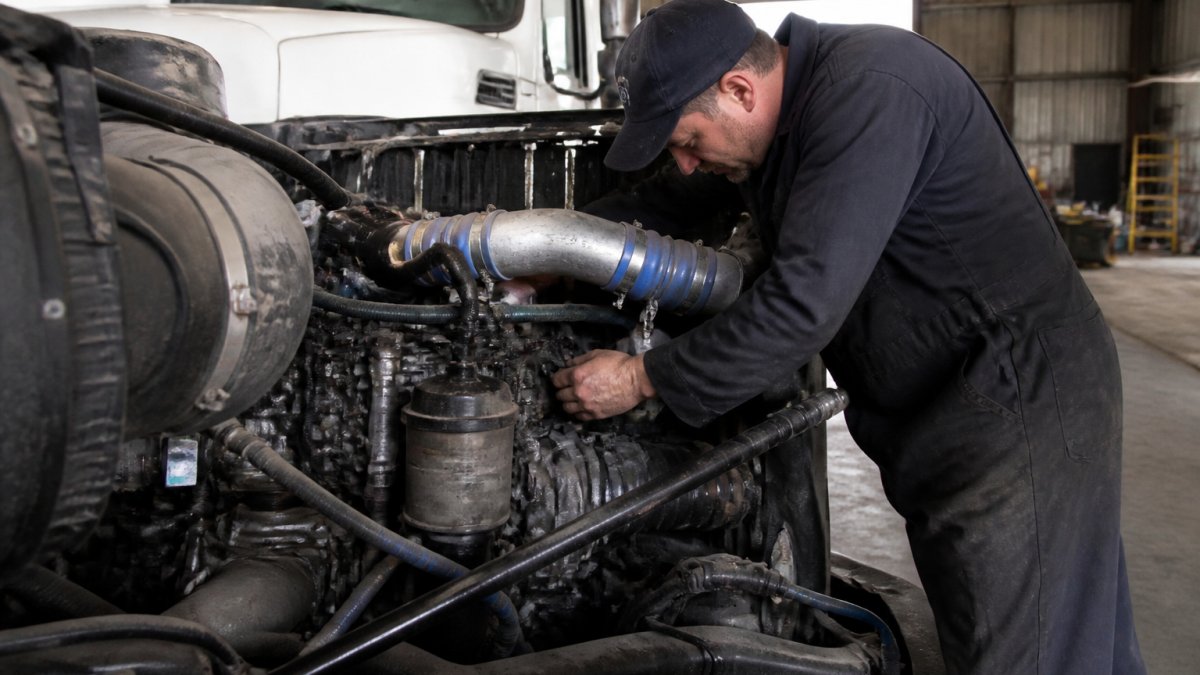
A roadside technician can handle many common breakdowns on the spot, so you skip the tow, the yard, and the second wait.
When Mobile Truck Repair Beats a Tow
Mobile repair is usually the better call when the problem is something a technician can fix at the roadside. Think:
A dead battery or charging issue
A flat tire or tire damage
A fuel or air-line problem
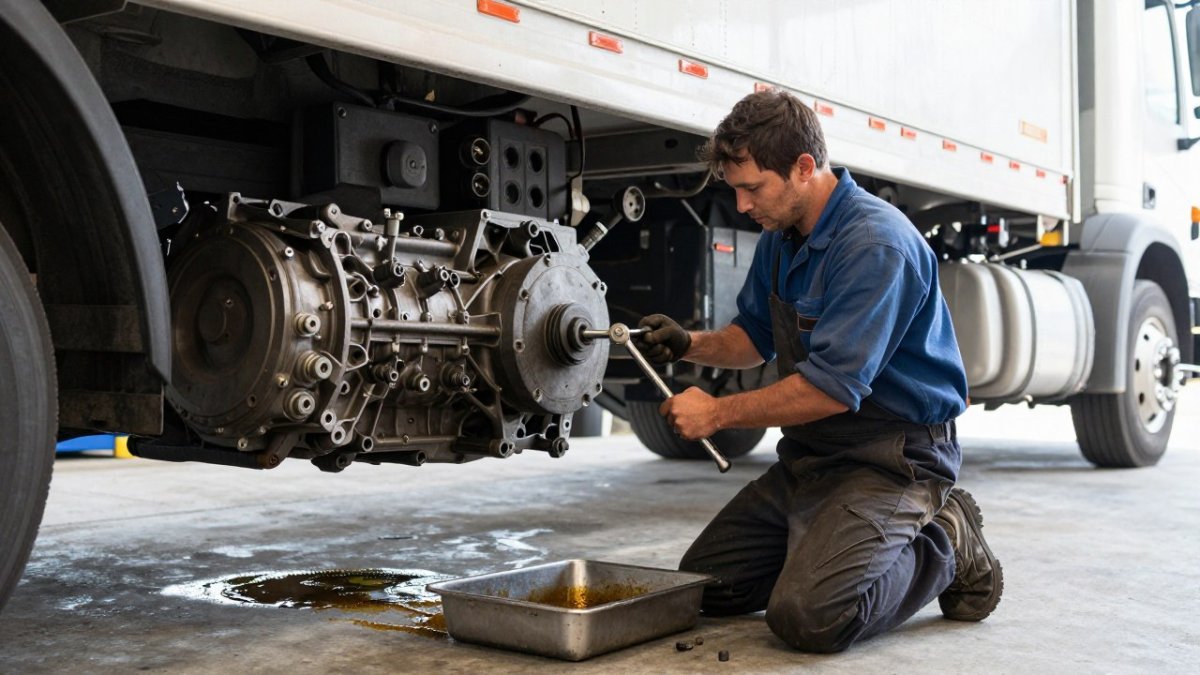
A tow makes more sense when the truck needs a lift, a bay, or heavy equipment. Major engine or transmission failures often fall into that group. A good provider will tell you honestly which one you need.
How to Get an Accurate Truck Roadside Mechanic ETA
An accurate ETA comes from giving the dispatcher good information and asking the right questions back. The more detail you provide, the tighter the estimate.
Step-by-Step: What to Say When You Call
State your exact location using mile markers and exits.
Describe the truck: make, model, and load.
Explain the symptom in plain terms.
Confirm whether the truck is safe to stay where it is.
Ask for a response-time range, not a single number.
Ask how many miles away the nearest technician is.
Get a callback number and a dispatch reference.
Ask how you can track the technician's arrival.
A provider that offers 24/7 dispatch should give you a service request number and a way to check status. If you cannot verify dispatch, call back and confirm.
Watch Out Never accept "we'll be there soon" as an ETA. Without a range and a dispatch reference, you have no way to plan, and no way to escalate if the technician is delayed.
What to Do During a Semi-Truck Breakdown While Waiting
Safety comes first while you wait, and the first few minutes after a breakdown are the most dangerous. Most roadside injuries happen because a driver stepped into traffic or stayed in a truck that was not positioned safely.

Step 1: Get the Truck as Far Off the Travel Lane as Possible
If the truck still rolls, coast or limp it onto the widest part of the shoulder, an exit ramp, or a nearby weigh station. Every foot of separation from the travel lane reduces your risk. Avoid stopping in a curve, on a bridge, or just over a hill crest, those are the spots where approaching drivers see you last.
If the truck will not move, leave it where it is and focus on visibility and getting yourself out of the traffic side.
Step 2: Make the Truck Visible
Turn on hazard lights immediately.
Set out reflective warning triangles behind the rig. Federal rules require them for commercial vehicles stopped on the shoulder, and they are your most effective visibility tool. Place the first close to the rear, the second farther back, and the third farthest back on the traffic side. On a curve or hill, push them farther out so drivers get warning earlier.
If you have road flares or LED warning lights, use them in addition to the triangles, not instead of them.
Step 3: Decide Whether to Stay in the Cab or Exit
The right answer depends on where the truck is sitting:
On a wide shoulder with a barrier or guardrail: exit on the passenger side, away from traffic, and wait behind the barrier if one is present.
On a narrow shoulder with no barrier: stay in the cab with your seatbelt on. A truck cab is designed to absorb impact; a person standing on the shoulder is not.
In a travel lane or a dangerous position: exit immediately on the traffic-away side and get well clear of the roadway, even if that means standing on the far side of a guardrail.
Never stand between your truck and oncoming traffic, and never stand behind the trailer where a distracted driver could strike it.
Step 4: Stay Visible and Reachable
Keep your safety vest on any time you are outside the cab.
Keep your phone charged. If the battery is low, plug into the truck's 12-volt outlet while the engine runs, or use a portable battery pack.
Keep the dispatcher's number and your service request number where you can reach them without searching.
Step 5: Manage the Wait
Check in with dispatch if the ETA passes without an update. A short call keeps the request active and surfaces delays early.
Do not attempt your own repair on the traffic side of the truck. Even a simple tire change puts you in the path of passing vehicles.
If weather or darkness makes the position more dangerous over time, tell dispatch. A provider may reroute a closer unit or advise you to move.
Driver safety is not optional. Stay put when the cab is the safest place, stay visible when you must be outside, and let the technician come to you.
Truck Roadside Repair Costs and Authorization
Truck roadside repair costs depend on the problem, the parts, and the time of day. We do not quote a flat number over the phone, because it is rarely accurate.
Before you authorize anything, confirm:
Whether there is a separate service call or dispatch fee
How the provider bills labor, by the hour or by the job
Whether parts are included or billed separately
A transparent provider explains the cost structure up front and gets your approval before starting, protecting your budget from surprise charges. For current pricing on our services, check with our team directly.
Pro Tip Ask for the cost structure, not just the total. Knowing how a provider bills labor and parts tells you whether the final number will match the estimate.
Conclusion
A breakdown never happens at a good time, and a vague ETA only makes it worse. The fix: give clear location details, ask for a response-time range, and confirm dispatch before you hang up.
That is how Big Rig Truck Repair works. We run 24/7 big rig repair and mobile road service, and our certified technicians combine advanced diagnostics with hands-on skill.
Frequently Asked Questions
How long does it take for truck roadside assistance to reach a truck?
Response time varies by location, traffic, and weather. In metro areas, technicians often arrive within 60 to 90 minutes. Rural stretches or severe weather can push that to 2 to 4 hours. When you call, ask for a specific time window based on your exact breakdown location and current conditions. A dispatcher who tracks technician locations can give you a more accurate estimate than a generic average.
What information should I provide when requesting truck roadside assistance?
Give your exact location using highway mile markers or exit numbers, your truck's make and model, a description of the mechanical failure, and your contact number. Mention if you are hauling hazardous materials or if the load requires refrigeration. The more detail you provide, the faster the dispatcher can assign the right mobile truck repair unit and give you a realistic truck roadside mechanic ETA.
Can a truck be repaired on the roadside, or does it need a tow?
Many common breakdowns, including flat tires, dead batteries, fuel delivery issues, and minor air leaks, can be repaired on the spot by a mobile truck repair technician. Major mechanical failures like a blown transmission or a seized engine usually require towing to a shop. Ask the dispatcher upfront whether your issue is likely a roadside repair or a tow, so you can plan accordingly and avoid unnecessary towing fees.
What should a fleet dispatcher do if a roadside mechanic is delayed?
Contact the service provider for an updated truck roadside mechanic ETA and ask if another nearby unit can be reassigned. Meanwhile, confirm the driver is safe and has moved to a protected area if possible. Document the delay for your records and notify the customer if the load is time-sensitive. If delays are frequent, review your service provider's dispatch process and coverage area to reduce future disruptions.

Comments